Optimization of Fermentation Time and Ghalkoff Microbial Concentration on Organic Robusta Coffee
DOI:
https://doi.org/10.22437/j-bigme.v6i2.54165Keywords:
Fermentasi, Ghalkoff, Kopi Robusta Organik, Response Surface MethodologyAbstract
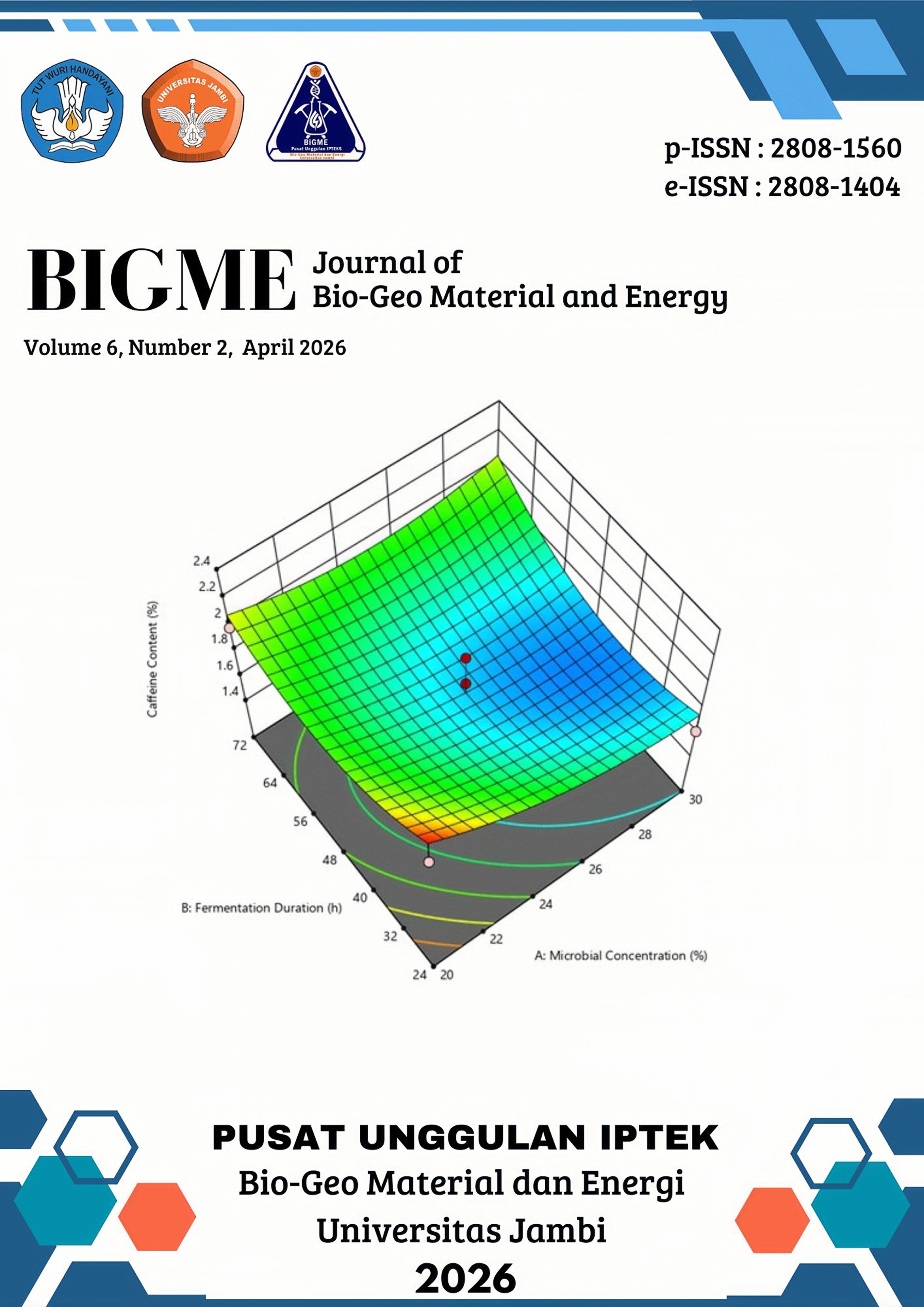
This study aimed to optimize fermentation time and Ghalkoff microbial concentration on the chemical and microbiological characteristics of organic Robusta coffee as an alternative to civet coffee. The method used was Response Surface Methodology (RSM) with a two-factor Central Composite Design (CCD), consisting of fermentation time (24, 48, 72 hours) and Ghalkoff microbial concentration (20%, 25%, 30% w/v). Parameters analyzed included caffeine content, chlorogenic acid content, total microbial count, and sensory evaluation (cupping test). The results showed that optimal conditions were achieved at a fermentation time of 72 hours and a microbial concentration of 30% (w/v), yielding the lowest caffeine content of 1.55%, the highest chlorogenic acid content of 6.81%, and a cupping score of 84, closely approaching that of commercial civet coffee (85). The caffeine content obtained meets the SNI 01-3542-2004 requirements for ground coffee quality grades I and II. Fermentation using Ghalkoff microbes was proven effective in improving the chemical and sensory characteristics of organic Robusta coffee and has potential as a more ethical and sustainable alternative to civet coffee production.
Downloads
Downloads
Published
How to Cite
Issue
Section
License
Copyright (c) 2026 Tesy Pratami, Ika Putri Sulistiana, Suharyono, Subeki, Medina Alia Rahmawati, Suci Putri Ramadani

This work is licensed under a Creative Commons Attribution 4.0 International License.