.:: E-ISSN ::.


AUTHOR GUIDELINES
SUBMISSION FOR PREPARATION CHECKLIST
TYPES OF MANUSCRIPT
TITLE PAGE FILE
Download template of Title Page
ARTICLE STRUCTURE
ORIGINAL RESEARCH
Title
Title should be written concisely and capital each words, Font 12 Pt , Times New Roman, Bold, Maximum 15 Words
Abstract
Abstract written no more than 250 words with single space . Font size 10pt. Abstract consist of: Background, Purpose, Methods, Results, and Conclusions. Wording should be concise and abbreviations are not allowed.
Keywords: consists of minimum three up to five words.
Background
Background contains the objectives of the study accompanied by appropriate rearanges.
Methods
Methods describe design, population, sample, technique sampling, instruments, procedures, and data analysis. It must be included the validy test and reliability test if researchers do the test. The ethical clearance also must be written.
Results
Results study must depicted in clear way and answer objective study . If results served in form table , table served in horizontal form . Fill in the table written using Times New Roman with single space with size 10 pt . Title table written with Times New Roman 11pt and printed thick placed on top table . Numbering table use number . Picture placed in a way symmetrical in column with distance single space
Discussion
Discussion consists of analysis and critical thinking from writer to the study results. The obtained result also compare to finding previous and also existing theories. Other sources of references (of the previous research) are aimed at strengthening the argumentation of the results of research that had been done.
Conclusion
Made in form narrative which is findings main in study . It is included the recommendation for further study.
Acknowledgement
This section can be expressed thanks to institutions, experts, or other bodies that play an important role in the implementation of research undertaken.
Reference
References must use a reference manager: Mendeley, Zotero, Endnote. The minimum number of references is 20. 80% referenced library is a journal (primary source) with a maximum age of 10 years. The references in JINI used American Psychological Association (APA) 7th Edition.
Article Journal on the Internet with DOI
Moon, H., & Hyun, H. S. (2019). Nursing students' knowledge, attitude, self-efficacy in blended learning of cardiopulmonary resuscitation: a randomized controlled trial. BMC Medical Education , 19 (1), 414. https://doi.org/10.1186/s12909-019-1848-8
Article Journal Without DOI (DOI not Available):
Moon, H., & Hyun, H. S. (2019). Nursing students' knowledge, attitude, self-efficacy in blended learning of cardiopulmonary resuscitation: a randomized controlled trial. BMC Medical Education , 19 (1), 414. Retrieved from www.midwifery.iocspublisher.org
Book
Hudak, C. M., Gallo, B. M., & Gonce, M. P. (1998). Critical Care Nursing: A Holistic Approach . USA: Lippincot.
Proceedings
Bailey, J. M. (2004). Florida State University Libraries Patients and Nurses' Perceptions of the Cardiac Patient's Learning Needs . Florida State University.
Article from the website
Macon, B. L., Yu, W., & Reed-Guy, L. (2017). Acute Myocardial Infarction. Retrieved March 8, 2020, from Healthline website: https://www.healthline.com/health/acute-myocardial-infarction
Thesis/Dissertation
Bailey, J. M. (2004). Florida State University Libraries Patients and Nurses' Perceptions of the Cardiac Patient's Learning Needs . Florida State University. Florida
REVIEW ARTICLE
Title
Title should be written concisely and capital each words, Font 12 Pt , Times New Roman, Bold, Maximum 15 Words
Abstract
The structured abstract must contain the following headings: Background, Purpose, Methods (including Design and Data Sources with search dates), Results, and Conclusions. The abstract should not exceed 250 words. It should be written concisely, presenting only the essential information, and abbreviations are not permitted in the abstract.
Keywords: consists of minimum three up to five words.
Background
The background outlines the current state of research on the topic and includes sufficient background information, as well as a review of prior studies to identify existing solutions and methods while highlighting their limitations. This demonstrates the scientific significance or innovations presented in the paper. It is important to refrain from providing an exhaustive literature review or summarizing the results. The purpose of the study should clearly articulate the primary objective of the research and be positioned at the end of the introduction section.
Methods
The structure of methods include:
Research design
Search methods
Inclusion and Exclusion criteria
Screening of articles
Data extraction
Quality appraisal
Data analysis
Results
The results should encompass the outcomes of the search, findings from the quality assessment, and analytical results. Please illustrate the search outcomes using the PRISMA flow diagram. Summarize the results of the assessment as outlined in the methodology. The analytical findings should be presented in terms of themes, categories, patterns, and similar structures.
Discussion
The discussion should examine the importance of the review findings. Please detail the applicability as well as the theoretical and practical implications of these findings. Clarify how the review contributes to the current body of knowledge, identify any gaps in understanding, and outline directions for future research.
Conclusion
The conclusion should provide a summary of key elements from the studies reviewed and assess the current state of the literature. It should highlight notable weaknesses or gaps in existing knowledge, suggest areas for future research, and connect your findings to the existing body of knowledge.
Acknowledgement (optional)
This section can be expressed thanks to institutions, experts, or other bodies that play an important role in the implementation of research undertaken.
References
References must use a reference manager: Mendeley, Zotero, Endnote. The minimum number of references is 20. 80% referenced library is a journal (primary source) with a maximum age of 10 years. The references in JINI used American Psychological Association (APA) 7th Edition.
Article Journal on the Internet with DOI
Moon, H., & Hyun, H. S. (2019). Nursing students' knowledge, attitude, self-efficacy in blended learning of cardiopulmonary resuscitation: a randomized controlled trial. BMC Medical Education , 19 (1), 414. https://doi.org/10.1186/s12909-019-1848-8
Article Journal Without DOI (DOI not Available):
Moon, H., & Hyun, H. S. (2019). Nursing students' knowledge, attitude, self-efficacy in blended learning of cardiopulmonary resuscitation: a randomized controlled trial. BMC Medical Education , 19 (1), 414. Retrieved from www.midwifery.iocspublisher.orgJournalhomepage:www.midwifery.iocspublisher.org
Book
Hudak, C. M., Gallo, B. M., & Gonce, M. P. (1998). Critical Care Nursing: A Holistic Approach . USA: Lippincot.
Proceedings
Bailey, J. M. (2004). Florida State University Libraries Patients and Nurses' Perceptions of the Cardiac Patient's Learning Needs . Florida State University.
Article from the website
Macon, B. L., Yu, W., & Reed-Guy, L. (2017). Acute Myocardial Infarction. Retrieved March 8, 2020, from Healthline website: https://www.healthline.com/health/acute-myocardial-infarction
Thesis/Dissertation
Bailey, J. M. (2004). Florida State University Libraries Patients and Nurses' Perceptions of the Cardiac Patient's Learning Needs . Florida State University. Florida
CASE STUDY
Title
Title should be written concisely and capital each words, Font 12 Pt , Times New Roman, Bold, Maximum 15 Words.
Abstract
Abstract written no more than 250 words with single space . Font size 10pt. The background should provide an overview of the significance of the case and explain why it warrants reporting. Please indicate if this is the first instance of such a case documented in the literature. The case illustration should succinctly describe the patient(s) presentation, including their age, gender, and ethnic background. The conclusion should summarize the key takeaways from the case report and its clinical implications.
Keywords: consists of minimum three up to five words.
Background
Background contains the objectives of the study accompanied by appropriate reaaranges.
Methods/Case Ilustration
This section should include all pertinent details regarding the case and can be organized into distinct subsections with appropriate headings, such as history and presenting conditions, interventions, outcomes, etc. It should provide essential information about the case, including relevant demographic details of the patient while ensuring their anonymity (without including any information that could reveal the patient's identity), medical history, observed symptoms, and any tests or treatments administered to the patient. If the report includes multiple cases, details for each patient must be provided. Discuss the significance and rarity of the findings, referencing previous studies as needed.
If tables or images are to be included, specific guidelines should be adhered to. Fill in the table written using Times New Roman with single space with size 10 pt. Title table written with Times New Roman 11pt and printed thick placed on top table. Numbering table use number. Picture placed in a way symmetrical in column with distance single space
Discussion
Discussion consists of analysis and critical thinking from writer to the study results. The obtained result also compared to with findings previous and also existing theories. Other sources of references (of the previous research) are aimed at strengthening the argumentation of the results of research that has been done.
The discussion section should provide key interpretations of the findings and results in relation to earlier studies. It is important to highlight the significance of the findings and the case presentation in contrast to previous research within the same field.
This section should assess the case for its accuracy, validity, and uniqueness while comparing or contrasting it with existing literature. The authors should offer a concise summary of the relevant published literature, citing current references.
Conclusion
Made in form narrative which is findings main in study. This section should provide a conclusion to the case reports and highlight how they contribute to the existing body of knowledge. It should summarize the relevance and importance of the findings to the relevant field succinctly.
Acknowledgement (optional)
This section can be expressed thanks to institutions, experts, or other bodies that play an important role in the implementation of research undertaken.
References
References must use a reference manager: Mendeley, Zotero, Endnote. The minimum number of references is 20. 80% referenced library is a journal (primary source) with a maximum age of 10 years. The references in JINI used American Psychological Association (APA) 7th Edition.
Article Journal on the Internet with DOI
Moon, H., & Hyun, H. S. (2019). Nursing students' knowledge, attitude, self-efficacy in blended learning of cardiopulmonary resuscitation: a randomized controlled trial. BMC Medical Education , 19 (1), 414. https://doi.org/10.1186/s12909-019-1848-8
Article Journal Without DOI (DOI not Available):
Moon, H., & Hyun, H. S. (2019). Nursing students' knowledge, attitude, self-efficacy in blended learning of cardiopulmonary resuscitation: a randomized controlled trial. BMC Medical Education , 19 (1), 414. Retrieved from www.midwifery.iocspublisher.orgJournalhomepage:www.midwifery.iocspublisher.org
Book
Hudak, C. M., Gallo, B. M., & Gonce, M. P. (1998). Critical Care Nursing: A Holistic Approach . USA: Lippincot.
Proceedings
Bailey, J. M. (2004). Florida State University Libraries Patients and Nurses' Perceptions of the Cardiac Patient's Learning Needs . Florida State University.
Article from the website
Macon, B. L., Yu, W., & Reed-Guy, L. (2017). Acute Myocardial Infarction. Retrieved March 8, 2020, from Healthline website: https://www.healthline.com/health/acute-myocardial-infarction
Thesis/Dissertation
Bailey, J. M. (2004). Florida State University Libraries Patients and Nurses' Perceptions of the Cardiac Patient's Learning Needs . Florida State University. Florida


 |
Jurnal Ilmiah Ners Indonesia (JINI)
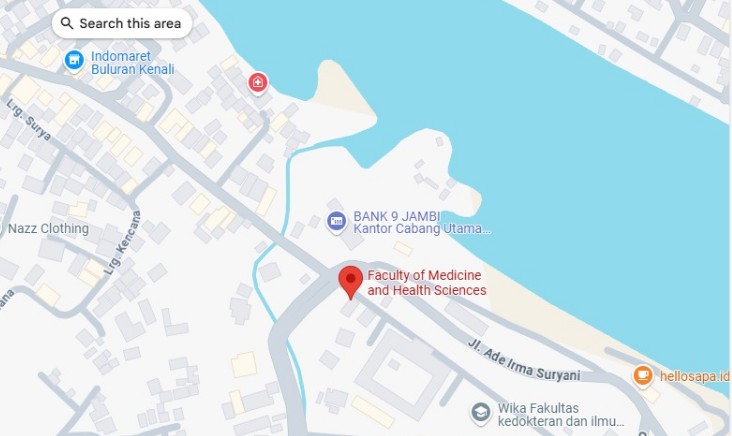
Publisher: Nursing Study Program, Faculty of Medicine and Health Sciences, Universitas Jambi
Jl. Arif Rahman Hakim, Telanaipura, Kec. Telanaipura, Kota Jambi, Jambi 36361, Indonesia
E-mail: jini@unja.ac.id
|

Jurnal Ilmiah Ners Indonesia (JINI) is licensed under a Creative Commons Attribution 4.0 International License.
